recipe
Cabbage Mallung: Sri Lankan Cabbage and Coconut
Finely shredded cabbage wilted with a little water, then tossed with grated coconut, mustard and turmeric. A gently cooked dry side for a rice-and-curry meal.
AI editorial review: 2026-10-22
Researched recipe; not cooked or tested by Culinara.
Jump to ingredients and methodPrint using your browser’s Print command.
Ingredients and method
Ingredients
- 1 pound green cabbage, tough core removed, finely shredded
- 1/4 US cup finely chopped onion
- 1 green serrano chile, finely chopped; seed or omit for less heat
- 8 curry leaves, finely sliced
- 3 tablespoons water, plus a little only if needed
- 1/2 teaspoon fine salt
- 3 1/2 ounces (100 g) fresh or thawed frozen unsweetened grated coconut
- 1/2 teaspoon finely ground brown or black mustard seeds
- 1/4 teaspoon ground turmeric
- 1/4 teaspoon ground black pepper
Method
- Wash the cabbage before shredding. Put the shreds in a wide saucepan with the onion, chile, curry leaves, water and salt. Toss to distribute the seasoning.
- Cover and cook over medium-low heat, stirring occasionally, until the cabbage has wilted and the thickest shreds are tender with a little bite. Add a spoonful of water only if the pan dries before the cabbage softens.
- Meanwhile mix the grated coconut with the ground mustard, turmeric and pepper, breaking up any frozen or compacted coconut clumps.
- Uncover the cabbage. If water remains pooled in the bottom, let it evaporate briefly. Fold in the coconut mixture and cook, stirring, until heated through and evenly dispersed. Keep the cabbage moist but without a puddle of sauce.
- Taste and adjust salt. Serve with rice and parippu, or beside a spicier curry. Refrigerate leftovers promptly.
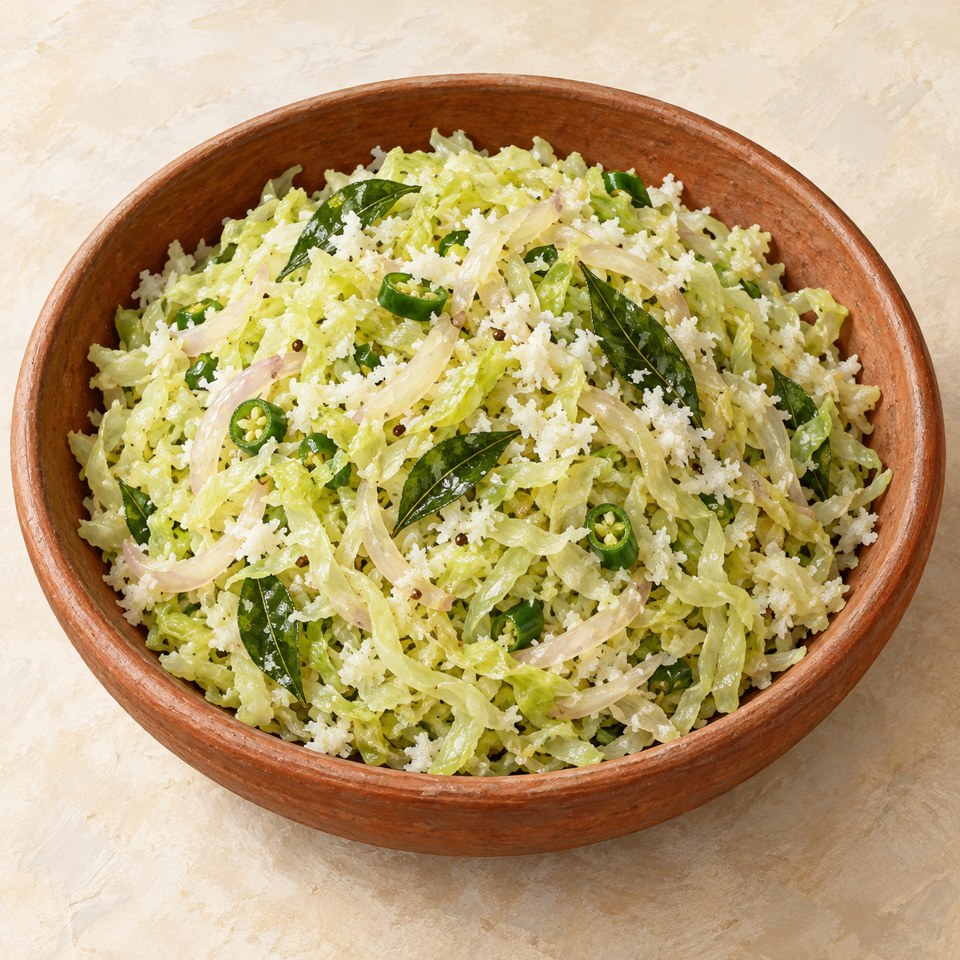
AI-generated illustration: Illustrated shredded cabbage and grated coconut with larger curry leaves; the written version uses finely sliced leaves and ground mustard.
OpenAI · Usage terms
Image details
Original text-to-image output proportionally resized to 960×960, JPEG-compressed; no crop or added content.
A water-wilted mallung
Mallung, also spelled mallum, combines finely cut vegetables and grated coconut. This cabbage version follows Koluu’s sequence of wilting the vegetable before adding the seasoned coconut. It needs neither coconut milk nor a separate frying step.
Kaema TV’s Sinhala-and-English recipe uses a ground coconut-and-aromatic mixture and an oil-heated opening. O Tama Carey also documents a butter-fried version. Those are separate approaches; this one stays gently cooked and uncharred.
Coconut texture matters
Fresh or thawed frozen grated coconut gives soft, distinct flecks. Sweetened baking coconut would add sugar and is unsuitable. The 100-gram amount here is for moist coconut. Do not use 100 grams of dry desiccated coconut plus water; that changes the coconut-to-cabbage ratio. For dry coconut, choose a recipe with its own measured hydration method.
Grind plain mustard seeds rather than using prepared yellow sandwich mustard. The latter brings vinegar and other seasonings. Omit the green chile for a milder result; the black pepper remains.
Serving and leftovers
The ingredient list contains coconut and mustard and has no added fish or dairy. Serve a modest spoonful alongside saucier dishes.
Refrigerate in shallow containers within two hours, or one hour above 90°F; keep at 40°F or below. Use within 3–4 days. Reheat hot leftovers to 165°F.
Research sources
- Koluu / Spice It Up! — Cabbage Mallung (checked 2026-10-22)
- Kaema TV — ගෝවා මැල්ලුම Gowa Mallum, Sinhala and English recipe (checked 2026-10-22)
- O Tama Carey / Gourmet Traveller — Cabbage mallung (checked 2026-10-22)
- U.S. FDA — Safe Food Handling (checked 2026-10-22)
- University of Illinois Extension — Leftovers (checked 2026-10-22)