recipe
Sri Lankan pumpkin curry with coconut milk (watakka)
Tender pumpkin pieces in a mild golden coconut sauce, finished with onion, curry leaves and mustard. Includes a peeled-butternut option for US grocery shopping.
AI editorial review: 2026-10-22
Researched recipe; not cooked or tested by Culinara.
Jump to ingredients and methodPrint using your browser’s Print command.
Ingredients and method
Ingredients
- 1 pound (450 g) peeled, seeded cooking pumpkin or butternut squash, cut into 1 1/2-inch pieces; prepared weight
- 3/4 cup water, plus small splashes as needed
- 3 garlic cloves, thinly sliced, divided
- 1/2 teaspoon ground turmeric
- One 1-inch cinnamon stick
- 3 green cardamom pods, lightly cracked
- 1/2 teaspoon fine salt, plus more to taste
- 3/4 cup unsweetened full-fat canned coconut milk, stirred smooth
- 2 tablespoons coconut oil or neutral oil
- 1/2 teaspoon black mustard seeds
- 1 small onion, thinly sliced
- 8 fresh or frozen curry leaves, rinsed and thoroughly dried
- 1/4 teaspoon crushed red pepper; optional
Method
- Put the prepared pumpkin in a saucepan wide enough to keep the pieces in a shallow layer. Add water, two-thirds of the garlic, turmeric, cinnamon, cardamom and salt. Bring to a gentle simmer, cover and lower the heat.
- Cook gently until a thin knife slides through the thickest pieces with little resistance. Check the bottom occasionally and add a small splash of hot water if it is drying before the pumpkin softens. Turn pieces carefully instead of stirring vigorously.
- Add the coconut milk and simmer uncovered over low heat until the sauce lightly coats the pumpkin. If there is excess liquid, lift the tender pieces out with a slotted spoon, reduce the sauce, then return them. If too thick, loosen with a little hot water.
- For the tempering, heat the oil in a small skillet over medium heat. Add mustard seeds and cover loosely with a splatter screen as they pop. Add onion, the remaining garlic and the dried-off curry leaves carefully. Stir until the onion softens and begins to turn golden. Lower the heat and add optional red pepper, stirring briefly without scorching it.
- Spoon the tempering and its oil into the curry and fold gently. Remove the cinnamon and cardamom pods as you find them; the whole spices are not intended to be eaten. Taste and adjust salt. Serve alongside rice and other curries.
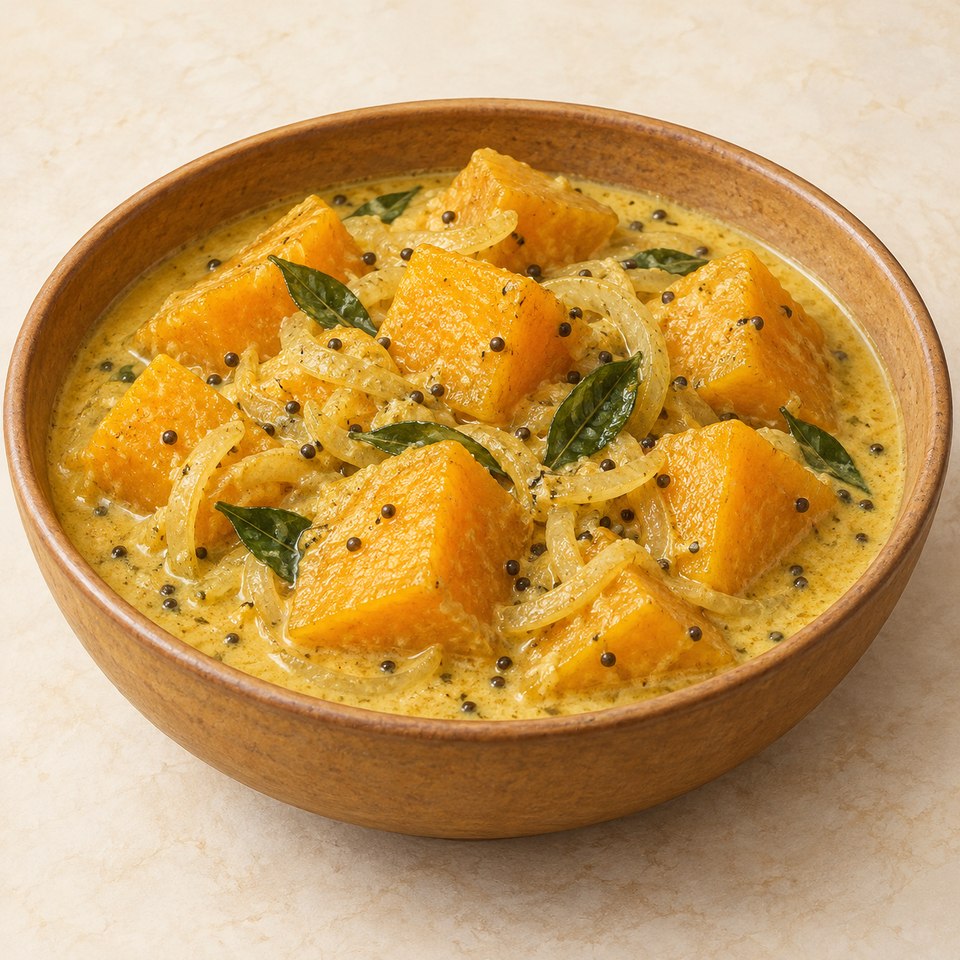
AI-generated illustration: A creamy pumpkin serving with visible onion, mustard and curry leaves; squash shape and sauce thickness depend on the chosen pumpkin and cooking.
OpenAI · Usage terms
Image details
Original text-to-image output proportionally resized to 960×960, JPEG-compressed; no crop or added content.
Choose pumpkin for cooking, or use peeled butternut
At a US store, look for a pumpkin sold for cooking, often labeled pie or sugar pumpkin. Large carving varieties tend to be more watery and grainy. Weigh the flesh after removing the seeds and peel, since whole-pumpkin weights include substantial waste.
Peeled butternut is the practical alternative selected for this adaptation. Its texture and sweetness will differ, so use tenderness rather than a fixed cooking time. Plain refrigerated precut squash avoids the hard-rind cutting step; trim unusually large pieces to the same size. Canned pumpkin purée cannot make the intact pieces described here.
A mild coconut curry, distinct from kalu pol
Jehan Yusoof's version uses water before coconut milk and a separate tempering. Sheetal Bhatt uses peeled pumpkin and a gentle simmer with coconut milk. This adaptation keeps the mild, creamy character and a final tempering, with a smaller oil quantity and US canned milk.
Wattakka and watakka are spellings you may see for pumpkin. Kalu pol is a different preparation: Sunil Ranasinghe's SBS recipe and SmartLady's Sinhala version use roasted rice and coconut. Those ingredients and dark roasted-spice flavors are not added to this mild recipe.
Keep the pieces intact and adjust the sauce
Different squashes release different amounts of moisture. A little breakage will thicken the curry, but repeated stirring can turn it into mash. Reduce a thin sauce separately once the pieces are tender.
Stir the can of coconut milk before measuring. Sweetened cream of coconut and coconut drinking beverages are different products. If curry leaves are unavailable, omit them and accept the missing fragrance; curry powder is not a leaf substitute.
Cool and reheat leftovers safely
Refrigerate in shallow containers at 40°F or below within two hours, or one hour above 90°F. Use within 3–4 days. Reheat to 165°F throughout, bringing the sauce to a boil; add a little water and turn the pieces carefully. The squash may break down more when reheated.
Research sources
- Jehan Yusoof, Island Smile — Sri Lankan Pumpkin Curry with Coconut Milk (checked 2026-10-22)
- Sheetal Bhatt, theroute2roots — Sri Lankan Pumpkin Curry (checked 2026-10-22)
- Sunil Ranasinghe, SBS Food — Pumpkin Curry (Wattaka Kalu Pol) (checked 2026-10-22)
- SmartLady — Pumpkin Kalu Pol (Sinhala) (checked 2026-10-22)
- University of Illinois Extension — Choosing a Pumpkin (checked 2026-10-22)
- FDA — Safe Food Handling (checked 2026-10-22)
- University of Illinois Extension — Leftovers (checked 2026-10-22)