recipe
Watalappan: steamed coconut and jaggery custard
A Sri Lankan coconut custard with solid kithul jaggery, whole eggs and cardamom, including a clear stovetop steaming setup and temperature check.
AI editorial review: 2026-10-22
Researched recipe; not cooked or tested by Culinara.
Jump to ingredients and methodPrint using your browser’s Print command.
Ingredients and method
Ingredients
- 250 g (8.8 ounces) solid kithul jaggery, finely grated or shaved
- 250 mL (about 1 cup plus 1 tablespoon) unsweetened full-fat canned coconut milk, stirred smooth
- 6 large US eggs, kept refrigerated until needed
- 1/2 teaspoon ground cardamom
- 1/8 teaspoon ground nutmeg
- 1/8 teaspoon fine salt
- Neutral oil for lightly greasing the dish
- 2 tablespoons chopped, ready-to-eat unsalted roasted cashews, for serving; optional
Method
- Before mixing, check your steamer setup. Use a shallow, heat-safe metal dish about 7 inches across and at least 1 quart in capacity, a rack and a deep pot with a lid. The dish must sit level above the water with space around it for steam and room to close the lid. Lightly oil the dish. Have a food thermometer and a safe way to lift the hot dish ready.
- Warm the jaggery and coconut milk in a small saucepan over low heat, stirring until the jaggery dissolves. Do not boil it down into a thick syrup. Remove from the heat and let it become barely warm before it touches the eggs.
- Whisk the eggs by hand just until the whites and yolks combine. Stir in the cardamom, nutmeg and salt, then gradually stir in the cooled jaggery mixture. Pass through a fine-mesh strainer into the prepared dish. Skim off large bubbles and cover the dish with foil to keep condensation out.
- Add water to the steamer pot according to its instructions, keeping the surface below the rack. Bring to a simmer, set the covered dish on the rack and close the pot. Maintain steady, gentle steam. Check the water level periodically and add boiling water around the dish if necessary; never let the pot boil dry.
- Begin checking the custard after about 30 minutes; this is a starting checkpoint, not a promised cooking time. Open the pot away from your face and carefully lift an edge of the foil. Continue steaming until the center is set with a slight tremble rather than liquid movement, and a clean food thermometer in the center reads at least 160°F without touching the dish. Re-cover and continue if either check is unmet.
- Use oven mitts and a suitable lifting rack or sling to move the dish to a heat-safe surface. For chilled serving, refrigerate within two hours of finishing cooking, or one hour if the room is above 90°F; do not wait indefinitely for it to cool on the counter. Once chilled, cover and keep cold. Spoon into bowls and add the optional cashews just before serving.
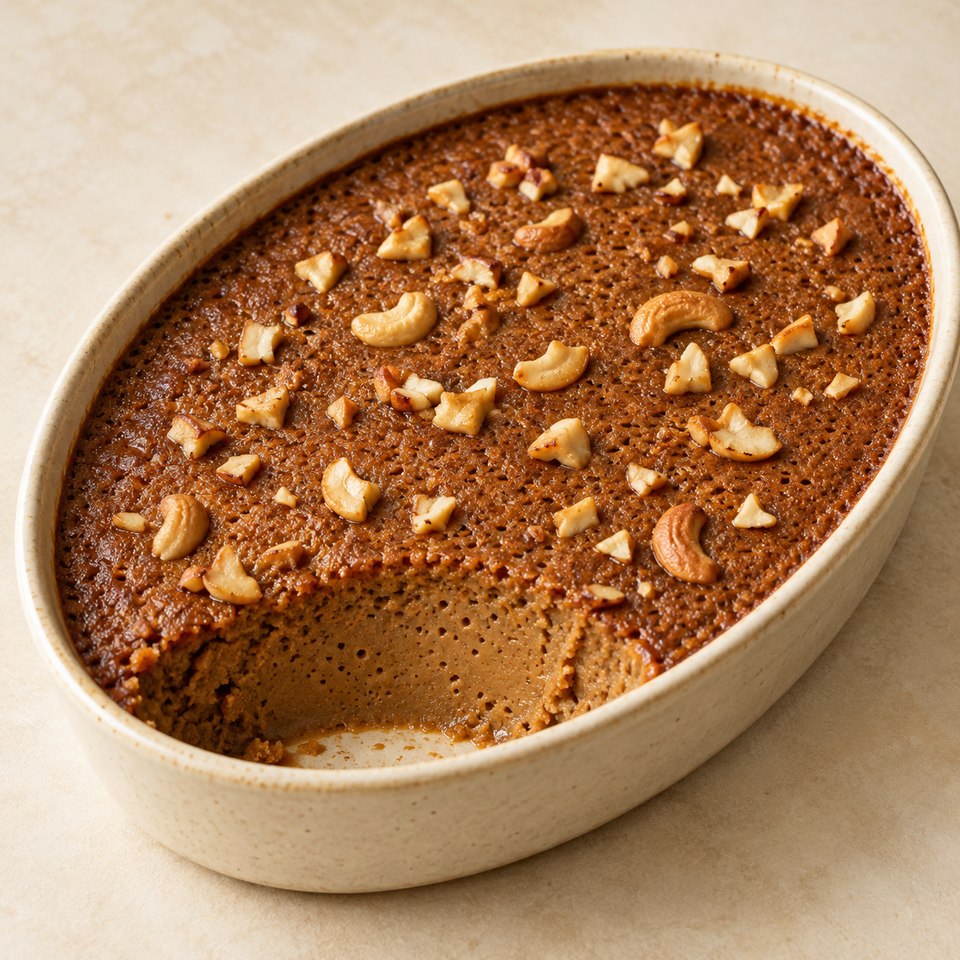
AI-generated illustration: A dark, porous custard serving with whole and chopped cashew garnish; color and pores vary with jaggery and steaming. The recipe uses a heat-safe metal steaming dish, not the pictured ceramic serving dish.
OpenAI · Usage terms
Image details
Original text-to-image output proportionally resized to 960×960, JPEG-compressed; no crop or added content.
A Sri Lankan dessert with Muslim and Malay associations
Watalappan, also spelled watalappam or wattalappam, is a spiced coconut-and-jaggery custard. The National Peace Council of Sri Lanka describes its close association with Sri Lankan Muslim celebrations, including Eid al-Fitr, and records the belief that Sri Lankan Malays brought it to the island. That account is not a claim that every family uses one recipe or that its origin is settled.
This version is steamed and uses coconut milk without dairy cream. It is intended to be served from its dish; no caramel coating or unmolding step is needed.
Weigh the jaggery and read the coconut label
Look for solid kithul jaggery, the palm-sugar product used in Sri Lankan versions of this dessert. The weighed amount avoids the uncertainty of measuring differently packed shavings in a cup. Kithul treacle is liquid and is not a direct replacement in this formula.
Use unsweetened full-fat coconut milk, not sweetened cream of coconut or a carton of coconut beverage. Stir the can thoroughly before measuring. The custard’s color will vary with the jaggery; a pale batch does not need added caramel merely to match a picture.
Dark brown sugar or other palm sugars produce a different flavor. Rather than guessing a syrup conversion or changing several ingredients at once, use solid kithul jaggery for this formulation.
Why this egg ratio and steaming setup
Shana’s Kitchen provides the six-egg, 250 g jaggery and 250 mL coconut-milk foundation used here. DailyLife’s Sinhala recipe also steams the custard, but uses five medium eggs with more jaggery. SBS documents a looser, cream-enriched baked version. Those formulas are alternatives, not interchangeable timings for this dish.
A shallow metal dish makes the center easier to check than a deep bowl. Its exact fit matters more than the pot’s advertised capacity. Do a dry fit before starting, use equipment rated for steaming, and follow its instructions. This is ordinary covered-pot steaming; do not lock a pressure-cooker lid or substitute a pressure program.
The 30-minute checkpoint is an editorial starting point within the different source estimates. Culinara has not timed or cooked this adaptation. Dish depth, temperature and steam strength affect how long it needs.
Set gently and keep chilled
Use gentle heat and avoid beating the eggs into a foam. The custard may have small pores, but aggressive boiling can give it a coarse texture. The thermometer check is essential: a set-looking surface or clean skewer alone does not establish the center’s temperature.
Keep refrigerated at 40°F or below and use within 3–4 days. Keep it cold until serving and follow the two-hour limit, shortened to one hour above 90°F. This dessert contains egg and coconut; the optional cashews add a tree-nut allergen.
Research sources
- Shana’s Kitchen — Watalappam (checked 2026-10-22)
- DailyLife.lk Sinhala — හරි විදිහට රසට වටලප්පන් (Watalappan) (checked 2026-10-22)
- Dini Kodippili, The Flavor Bender — Sri Lankan Watalappan (checked 2026-10-22)
- Deborah Solomon, SBS Food — Watalappan (checked 2026-10-22)
- National Peace Council of Sri Lanka — Recipes for Reconciliation, Watalappan (page 16) (checked 2026-10-22)
- US FDA — What You Need to Know About Egg Safety (checked 2026-10-22)
- FoodSafety.gov — Cold Food Storage Chart (checked 2026-10-22)
- FoodSafety.gov — 4 Steps to Food Safety (checked 2026-10-22)