recipe
Kiribath: Sri Lankan coconut milk rice
A stovetop jasmine-rice version of kiribath, with clear softness and shaping cues plus prompt rice-cooling guidance.
AI editorial review: 2026-10-22
Researched recipe; not cooked or tested by Culinara.
Jump to ingredients and methodPrint using your browser’s Print command.
Ingredients and method
Ingredients
- 1 cup dry white jasmine rice; not parboiled or instant rice
- 1 3/4 cups water, plus more hot water if needed
- 3/4 cup unsweetened full-fat canned coconut milk, stirred smooth
- 1/4 teaspoon fine salt, plus more to taste
- A few drops of neutral oil for the serving dish or spatula
Method
- Rinse the rice and drain. Put it in a heavy saucepan with the measured water. Bring to a simmer, cover and reduce to low heat. Cook until the grains are very soft; if the pan dries before the centers soften, add hot water a few tablespoons at a time and continue cooking.
- Uncover and stir in the coconut milk and salt while the rice is still hot. Cook over low heat, stirring along the bottom to prevent scorching. Press some grains gently against the pan as you stir.
- Continue until the rice forms a thick, cohesive mass with no pool of coconut milk. It should hold a mound on a spoon rather than pour. Taste for salt. If it remains loose, cook uncovered a little longer; if firm grains remain, add hot water and cook them through before shaping.
- Lightly oil a shallow heatproof dish or plate. Transfer the hot rice and press it into a layer about 3/4 inch thick using a lightly oiled spatula. Allow just enough cooling for the mass to hold together, then cut squares or diamonds with a clean, damp knife.
- Serve warm with seeni sambol or another savory accompaniment. Promptly portion and refrigerate any rice you will not serve; do not wait for a large tray to become completely cold on the counter.
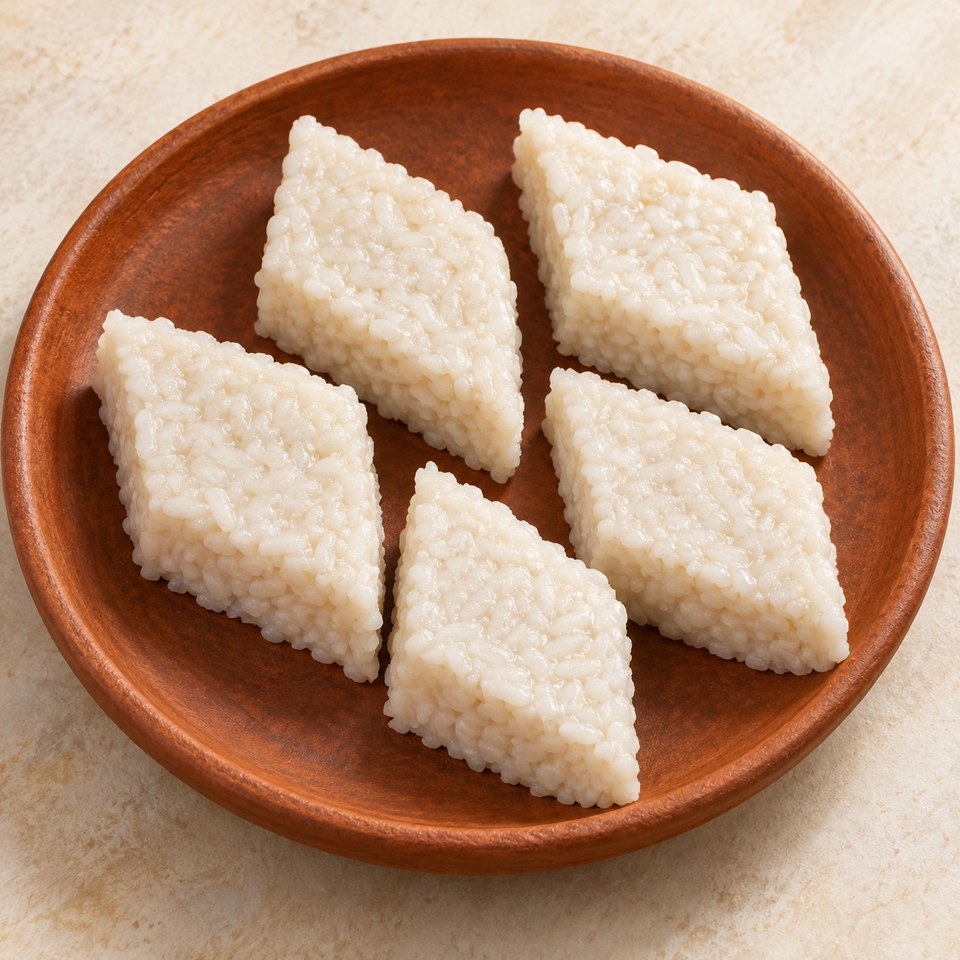
AI-generated illustration: Illustrated coconut milk rice diamonds; cut size, height and grain texture are a serving interpretation.
OpenAI · Usage terms
Image details
Original text-to-image output proportionally resized to 960×960, JPEG-compressed; no crop or added content.
Jasmine is a practical adaptation
Sri Lankan cooks describe kekulu rice for kiribath. Hungry Lankan and Island Smile also discuss jasmine as an option abroad. This recipe chooses ordinary white jasmine and cooks it softer than fluffy table rice. It is not a claim that all rice varieties behave alike.
Avoid parboiled rice for this method: its separate grains resist the cohesive texture needed for slicing. Thai glutinous rice, brown rice and instant rice need their own liquid and cooking methods; “sticky when cooked” does not mean every package labeled sticky rice is interchangeable.
Cook first, enrich, then shape
The selected sequence cooks rice in water before adding coconut milk. Both consulted stovetop-compatible sources support cooking toward softness and shaping the rice while hot. Water needs vary with the pan, lid and rice, so use the texture checks instead of forcing every batch to absorb an exact final amount.
Raji Thillainathan’s published family version uses coconut powder in a rice cooker from the outset. That is a separate product and appliance approach. Here, use unsweetened canned coconut milk and stir its separated cream back in before measuring.
Cool leftover rice promptly
The UK Food Standards Agency advises cooling rice as quickly as possible, ideally within one hour, refrigerating it and using it within 24 hours. Divide this dense rice into small shallow portions. Do not leave it cooling in the cooking pot.
Keep the refrigerator at 40°F or below. If reheating, heat only once, until steaming hot throughout and 165°F at the center. Reheating does not rescue rice that has been left warm too long.
Research sources
- Roshani Wickramasinghe, Hungry Lankan — Kiribath (Sri Lankan Milk Rice) (checked 2026-10-22)
- Jehan Yusoof, Island Smile — How to make Sri Lankan kiribath (milk rice) (checked 2026-10-22)
- Raji Thillainathan, published by Ahila — Kiribath with pol sambol and seeni sambol (checked 2026-10-22)
- Food Standards Agency — Home food fact checker: rice (checked 2026-10-22)
- USDA FSIS — Leftovers and Food Safety (checked 2026-10-22)