recipe
Pol sambol: coconut, chile and lime
A coarse Sri Lankan coconut sambol with US frozen-coconut guidance, adjustable chile and an optional Maldive fish addition.
AI editorial review: 2026-10-22
Researched recipe; not cooked or tested by Culinara.
Jump to ingredients and methodPrint using your browser’s Print command.
Ingredients and method
Ingredients
- 2 cups moist, finely grated unsweetened coconut, fresh or frozen and thawed in the refrigerator; see package guidance below
- 1/4 cup finely chopped shallot or red onion
- 1 teaspoon crushed red pepper flakes, plus more to taste
- 1/2 teaspoon pure ground red chile or sweet paprika
- 1/4 teaspoon fine salt, plus more to taste
- 1 tablespoon fresh lime juice, plus more to taste
- 2 teaspoons finely crushed, ready-to-eat Maldive fish flakes; optional (contains fish)
Method
- Check the frozen coconut label first: use a product suitable for eating without further cooking, or cook it according to its package instructions and chill before using. Drain off loose thawing liquid. Rinse the lime before cutting; use a clean board and utensils.
- In a mortar, crush the pepper flakes with the salt and ground chile. Add the optional Maldive fish and crush any hard pieces finely. Work in the shallot until bruised but still textured.
- Add coconut in batches and press and turn it through the seasoning. Keep recognizable coconut shreds; the goal is a moist, crumbly condiment, not a smooth paste. Without a mortar, mince the shallot very finely and rub everything together with clean hands or mix firmly with a spoon.
- Mix in the lime juice. Taste and add salt, lime or more chile in small amounts. Serve a small bowl with rice and curry or pol roti, keeping the rest covered in the refrigerator.
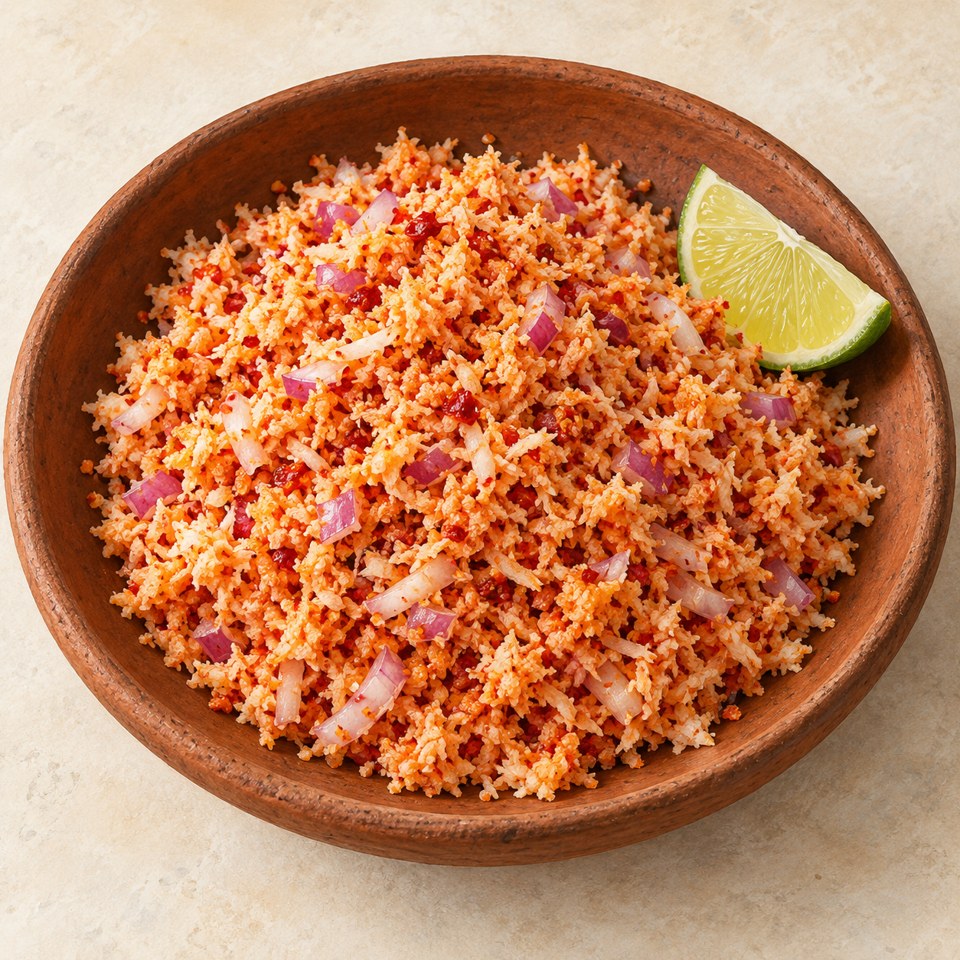
AI-generated illustration: A coconut-and-onion serving with a lime wedge; optional dried fish is not shown.
OpenAI · Usage terms
Image details
Original text-to-image output proportionally resized to 960×960, JPEG-compressed; no crop or added content.
Pick moist coconut, not sweet baking shreds
Freshly grated coconut and thawed unsweetened grated coconut are practical choices. Fine desiccated coconut is much drier; it needs separate hydration and will not reproduce this formulation by a simple equal-volume swap. Sweetened baking coconut changes the dish substantially.
For a food processor, pulse the seasonings and onion briefly, then pulse in coconut only enough to distribute them. A continually running blade can turn the mixture pasty. This is an equipment adaptation, not a tested processing time.
Fish is optional in this version
Hungry Lankan documents a coconut-and-lime base with optional Maldive fish; O Tama Carey includes fish, green chile and black pepper. The Tamil Cookd recipe adds ginger, garlic and coriander. This version deliberately keeps the base simpler instead of presenting all of those additions as compulsory.
Maldive fish contributes a dried-fish savoriness and adds a fish allergen. Leaving it out gives a coconut-forward vegetarian version. Use a product labeled ready to eat for this uncooked condiment, and follow its storage instructions.
Serve cold or promptly
Lime juice seasons the sambol; it does not establish a safe preservation process. Keep it covered at 40°F or below. Refrigerate within two hours of preparation or serving, or one hour above 90°F. Make a small batch for the meal rather than assigning this untested recipe an extended refrigerated shelf life.
Sources: [4]
Research sources
- Roshani Wickramasinghe, Hungry Lankan — Sri Lankan Coconut Sambol (checked 2026-10-22)
- O Tama Carey, SBS Food — Pol roti with pol sambol (checked 2026-10-22)
- Cookd — Coconut Sambol (Tamil-language recipe) (checked 2026-10-22)
- FDA — Safe Food Handling (checked 2026-10-22)