recipe
Pol roti: Sri Lankan coconut flatbread
Unleavened coconut flatbreads with onion and green chile, shaped by hand and cooked on an ordinary skillet.
AI editorial review: 2026-10-22
Researched recipe; not cooked or tested by Culinara.
Jump to ingredients and methodPrint using your browser’s Print command.
Ingredients and method
Ingredients
- 300 grams all-purpose flour (about 2 1/2 cups spooned into the cup and leveled), plus a little for handling
- 150 grams moist, finely grated unsweetened coconut, fresh or thawed frozen
- 1/3 cup finely chopped red onion
- 1 small green chile, finely chopped; optional
- 6 fresh or frozen curry leaves, rinsed, dried and finely sliced; optional
- 3/4 teaspoon fine salt
- 1/3 cup water to start, with additional water available
- 1 teaspoon coconut oil or neutral oil for lightly greasing your hands or skillet if needed
Method
- Combine flour, coconut, onion, chile, optional curry leaves and salt in a bowl. Add the starting water gradually, mixing with your fingertips or a fork. Add more water one tablespoon at a time until you can press the mixture into a soft dough that holds together without smearing like batter.
- Knead only until the dry flour is incorporated. Cover and rest for about 20 minutes to let the flour hydrate. If preparing farther ahead, refrigerate the dough rather than leaving the moist coconut mixture on the counter for hours. Do not taste raw dough.
- Divide into 8 pieces. With lightly oiled hands, flatten each between sheets of parchment or on a lightly floured surface into a disc about 1/4 inch thick. Keep the thickness even, including the middle, and cover unshaped portions.
- Heat a heavy skillet over medium heat. Cook one roti at a time, turning when the underside has browned patches. Continue turning as needed until both surfaces are browned and the center is cooked through. If the outside blackens while the middle is doughy, reduce the heat.
- Cut open the first roti to check that no sticky raw-flour layer remains. Adjust the heat and thickness for the next pieces; browned spots alone do not prove the center is cooked. Serve warm with parippu or seeni sambol.
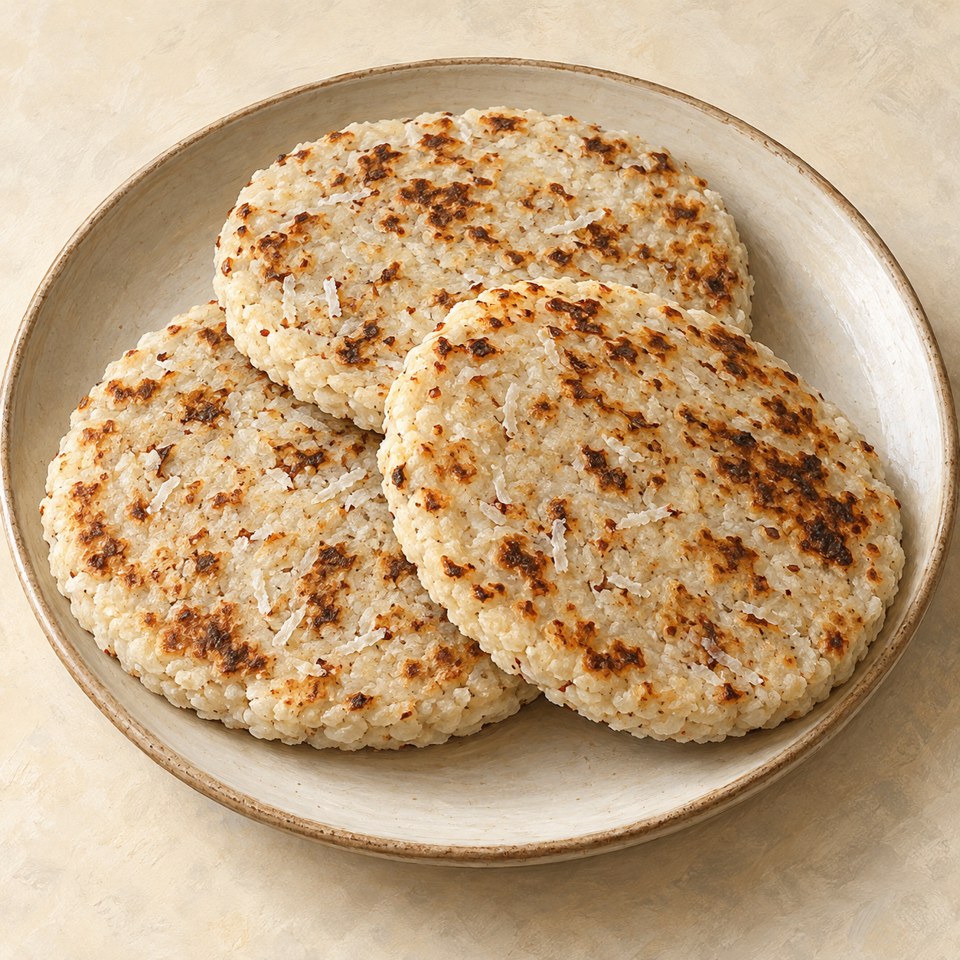
AI-generated illustration: A plain-looking coconut flatbread serving; onion and green-chile flecks in the written version are not prominent in this illustration.
OpenAI · Usage terms
Image details
Original text-to-image output proportionally resized to 960×960, JPEG-compressed; no crop or added content.
A moist-coconut, unleavened formulation
Pol roti methods differ. Dini Kodippili makes an unleavened dough with onion and chile; O Tama Carey uses self-raising flour and additional baking powder. This version selects the unleavened approach with moist grated coconut and a short covered rest.
Weights help because coconut shreds pack unevenly. The flour cup quantity is approximate, using a 120-gram cup as the measuring convention. Dried desiccated coconut absorbs differently, so do not substitute the same weight without changing the liquid; use a recipe designed for dry coconut instead.
Control the center before chasing dark spots
A normal heavy skillet is enough. Manoj Ranasoma describes a relatively gentle griddle heat, and other recipes use a hotter pan; choose the setting that cooks the center before the surface burns. Patting even discs matters more than making perfect circles.
This dough contains wheat. A gluten-free flour blend is not a verified direct swap, and self-rising flour changes both salt and leavening. Omitting onion and chile makes a plainer bread and can also change how much water the dough needs.
Handle flour and leftovers safely
Flour is raw food: do not taste the uncooked dough, and wash hands, utensils and surfaces after handling it. Keep raw flour away from the sambol and other ready-to-eat food.
Cool cooked roti in a shallow container and refrigerate within two hours, or one hour above 90°F, at 40°F or below. Use within 3–4 days and reheat thoroughly to 165°F. The coconut and onion make this a moist bread; do not treat it as a shelf-stable cracker.
Research sources
- Dini Kodippili, The Flavor Bender — Sri Lankan Pol Roti (Coconut Roti) (checked 2026-10-22)
- O Tama Carey, SBS Food — Pol roti with pol sambol (checked 2026-10-22)
- Manoj Ranasoma, ABC Adelaide — Sri Lankan Coconut (pol) Roti (checked 2026-10-22)
- FDA — Flour Is a Raw Food and Other Safety Facts (checked 2026-10-22)
- USDA FSIS — Leftovers and Food Safety (checked 2026-10-22)